

Behavidence in Advanced Discussions With Global Android Smartphone Manufacturers Following Strong Demand for NEURA

Neura Concept Phone

Behavidence Logo
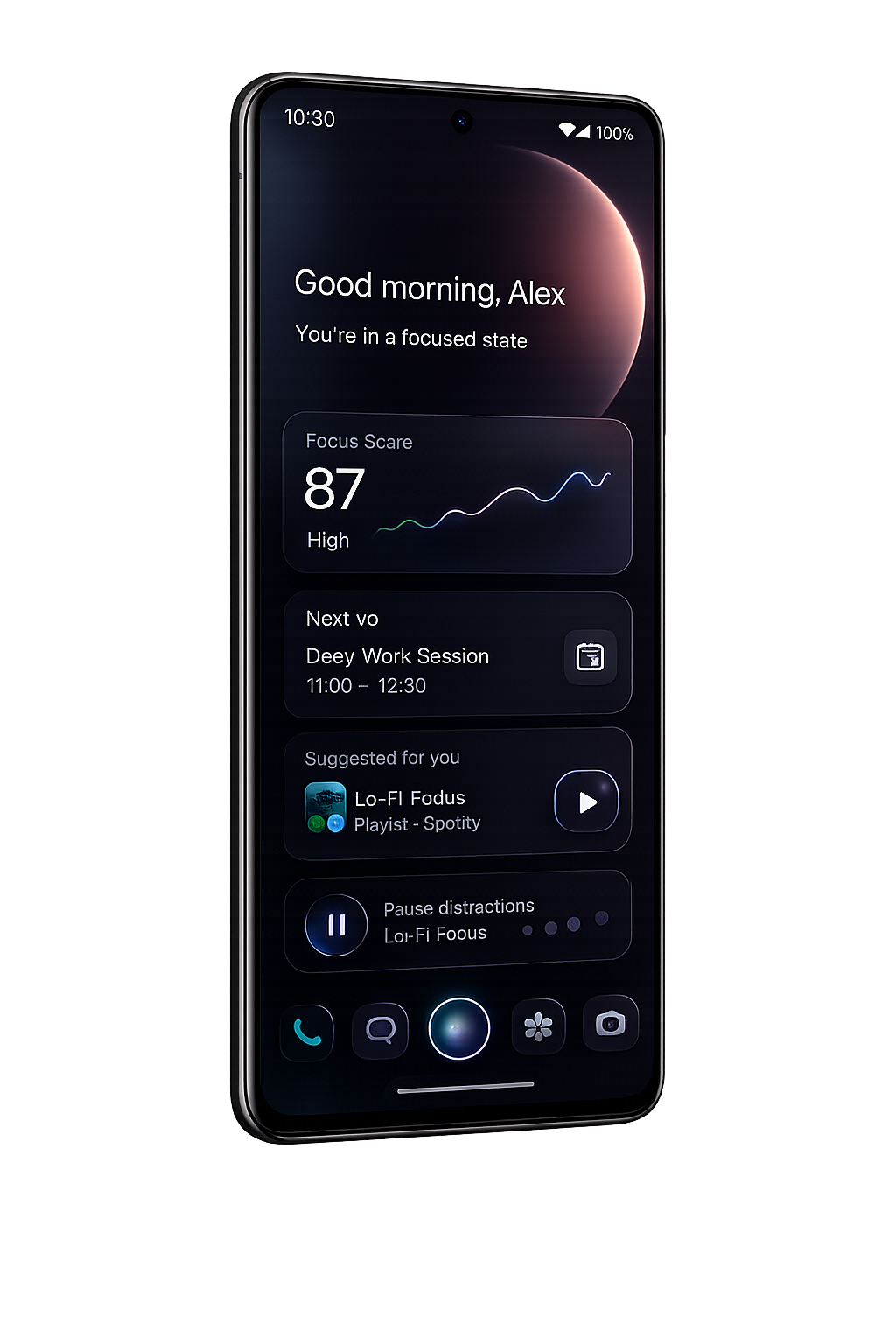
Neura Concept Phone
Thousands join the NEURA waitlist as Behavidence explores integrating its scientifically validated behavioral intelligence into next-generation smartphones
Understanding when technology should help us focus, when it should reduce interruptions and when it should simply get out of the way”
NEW YORK, NY, UNITED STATES, October 7, 2026 /EINPresswire.com/ -- Behavidence, a behavioral intelligence company developing passive digital biomarkers for mental health and cognition, today announced that it is in advanced discussions with global Android smartphone manufacturers regarding the potential integration of its technology into future mobile devices.— Roy Cohen
The discussions follow strong consumer response to NEURA, a concept developed by Behavidence for a new generation of smartphones designed around a simple principle:
The next generation of smartphones shouldn't compete for our attention. They should protect it.
Behavidence recently took the NEURA concept directly to consumers to test demand for a smartphone designed to actively support focus, cognition and mental well-being. The campaign generated thousands of waitlist registrations, providing an early indication of consumer demand for a different relationship with mobile technology.
Following that response, Behavidence is exploring how the technology behind NEURA could be embedded into smartphones from established Android manufacturers, potentially bringing the experience to millions of devices.
No commercial agreements have been announced at this stage.
From Distraction to Support
Modern smartphones are extraordinarily powerful, but they are also a persistent source of interruption. Notifications, social feeds, messaging, email and unlimited content compete for attention throughout the day.
Existing digital well-being tools often put the burden back on the user: activate Focus Mode, set screen-time limits, wear another device, track another metric or consciously decide when to disconnect.
Behavidence is proposing a different model.
What if the smartphone itself could understand when you need to focus, recognize changes in cognitive and behavioral patterns, and automatically adapt?
Focus Mode AI, the intelligence layer developed from the NEURA concept, is designed to use passive behavioral signals generated through normal smartphone use to understand changes in the user's cognitive and mental state.
When focus is high, unnecessary notifications could be automatically silenced while essential contacts remain available. When distraction increases, high-interruption applications could be deprioritized. When behavioral patterns indicate elevated stress, the device could surface music, breathing exercises or mindfulness experiences. When patterns associated with declining mood emerge, it could prioritize movement, exercise, social connection or other supportive experiences.
Even the home screen could become adaptive, changing which applications and shortcuts are prominent according to what may be most useful at that moment.
No journaling. No questionnaires. No additional wearable. No constant self-tracking.
The user simply uses their smartphone normally.
The Science Behind Focus Mode AI
Focus Mode AI builds on years of Behavidence research into how everyday smartphone interactions can provide measurable signals associated with mental health and cognition.
Two complementary Behavidence technologies form the foundation of the concept.
MHSS uses passive smartphone behavioral patterns to generate continuous indicators related to Mood, Worry, Stress and Focus. Instead of repeatedly asking users how they feel, the technology identifies changes in behavioral patterns over time.
Dopa One adds a cognitive layer, analyzing sub-second smartphone motion patterns using accelerometer and gyroscope signals to identify changes associated with cognitive and attentional states.
Together, the technologies create the potential for smartphones to move beyond understanding what a user is doing toward understanding what state the user is in and how the device should respond.
Importantly, the technology does not require Behavidence to read messages, analyze photographs, listen to conversations or understand the content users consume. Its architecture is built around passive behavioral signals and privacy-preserving deployment, including the potential for processing directly on the device.
Scientifically Validated Technology
While NEURA represents a new consumer application, the underlying Behavidence technology was originally developed for demanding healthcare and research environments.
Behavidence's digital biomarkers have been evaluated through peer-reviewed scientific research and used in programs and collaborations across healthcare, pharmaceutical, government and academic settings.
"The smartphone is possibly the most sophisticated behavioral sensor most of us carry, but almost all of its intelligence today is focused on understanding what we are likely to click, watch or buy next," said Roy Cohen, CEO and Co-Founder of Behavidence.
"We think there is a much more important opportunity: understanding when technology should help us focus, when it should reduce interruptions and when it should simply get out of the way."
A New Opportunity for Android Manufacturers
As smartphone manufacturers increasingly compete around AI-enabled experiences, Behavidence believes behavioral intelligence can create a new category of differentiation: devices optimized not only for performance, photography or AI assistance, but also for the cognitive performance and well-being of the person using them.
Focus Mode AI is being designed as a technology layer rather than a standalone application. Potential integrations range from an Android launcher to deeper system-level capabilities including notification management, application prioritization, adaptive home screens and contextual wellness recommendations.
Behavidence is currently in advanced discussions with multiple global Android device manufacturers regarding potential implementations of the technology.
"The response to NEURA showed us that people don't necessarily want another wellness app, another dashboard or another device they have to remember to wear," Cohen said. "They want the technology they already use every day to quietly work in their interest."
From NEURA to Millions of Devices
NEURA was initially conceived as a smartphone built around Behavidence's behavioral intelligence technology. Consumer response to the concept has opened a potentially larger opportunity.
Rather than simply asking whether Behavidence should manufacture another smartphone, the company is exploring whether the principles behind NEURA could become part of the broader Android ecosystem.
"If this technology ultimately reaches millions of smartphones rather than one device carrying our name, that would be an extraordinary outcome," Cohen said.
"Our goal isn't to sell people another screen. It's to change what the screen does for them."
Roy Cohen
Behavidence
email us here
Legal Disclaimer:
EIN Presswire provides this news content "as is" without warranty of any kind. We do not accept any responsibility or liability for the accuracy, content, images, videos, licenses, completeness, legality, or reliability of the information contained in this article. If you have any complaints or copyright issues related to this article, kindly contact the author above.
